Bloody thespians!
Did you ever read a book that exasperated you?
You felt like shouting at the characters every few minutes “GET A GODDAMN GRIP!!” or the classic “IT AIN’T THAT DEEP!”?
Yeah, If We Were Villains did that to me. But for some reason, now when I’m writing this, I don’t feel like shouting at them anymore. I feel like I want a happy ending. I’m not necessarily saying they didn’t get it, you’ll have to find that out yourself. I don’t even know if they deserve it, but I just want it. Sure, they’re dramatic as hell, damn stupid at times if you ask me, but as stated in the book, actors are by nature volatile – alchemic creatures composed of incendiary elements, emotion and ego and envy. Heat them up, stir them together, and sometimes you get gold. Sometimes disaster.
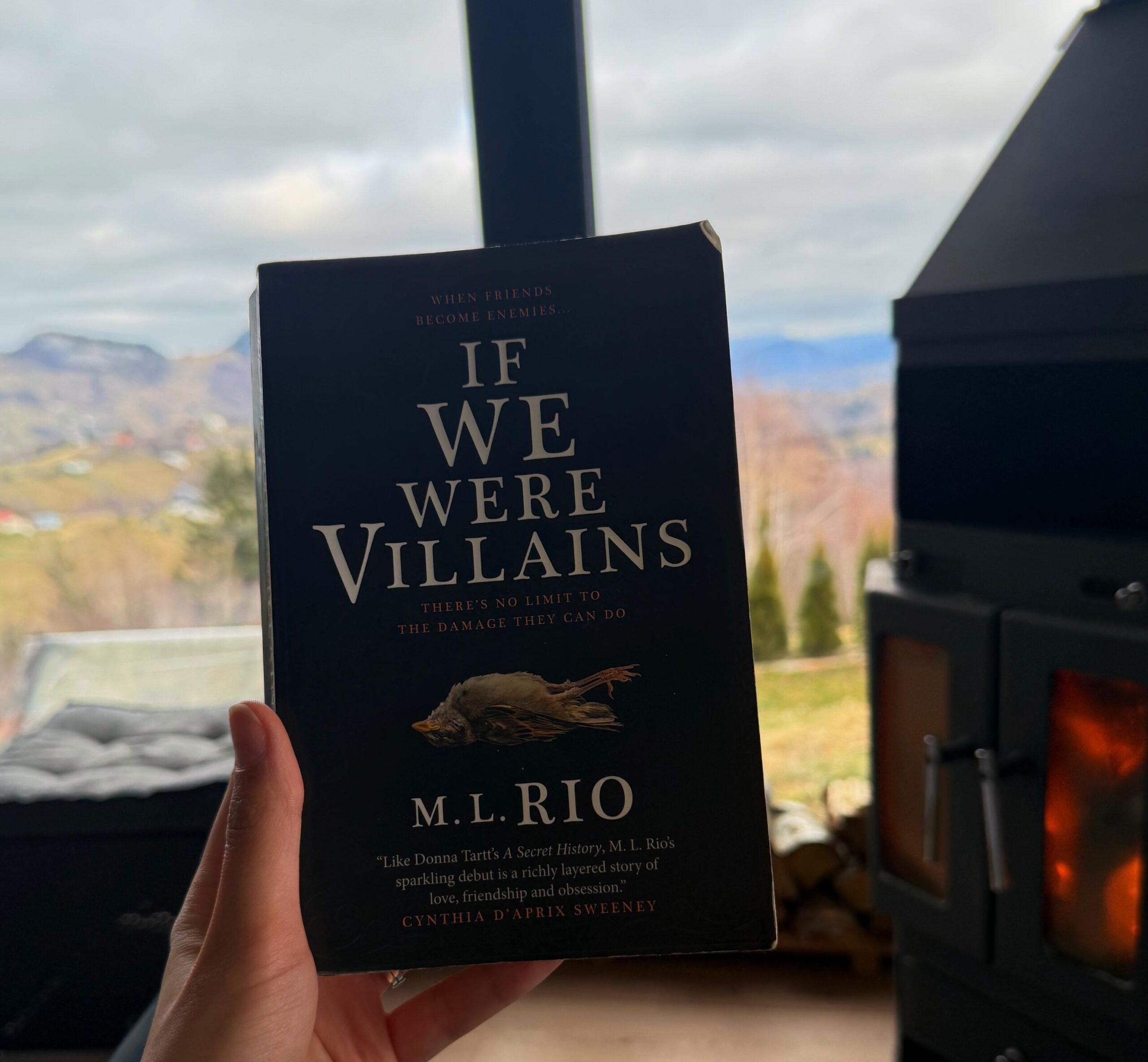
I read this book somewhere in a village on Romania’s Carpathian Mountains on a foggy cold week. I feel like it’s supposed to be more of a London read, Cambridge, maybe Dublin, for sure Edinburgh. Or.. drum rolling.. Illinois read (while trying to either find or avoid, by all means, Dellecher Classic Conservatory).
At its core, If We Were Villains is a theatre story masquerading as a murder mystery, or maybe the other way around. A group of six students (or is it 7?) bound together by Shakespeare, ambition, and the kind of intensity that only exists when you’re young and convinced that feelings are facts. They speak in monologues even when no one is watching. Especially then.
The book isn’t just soaked in Shakespeare. It’s basically marinated in him. And once you’re marinated long enough, it gets hard to tell where the role ends and the person begins.
And the thing about Shakespeare is: he gives you language for everything. Grief, rage, love, betrayal. He makes the unspeakable speakable. Which sounds beautiful — until you realise you can start using that beauty as a weapon. Or as a shield. Or as a full-body cloak you wrap around your worst choices and call it art.
One of my favourite lines hits exactly there: “You can justify anything if you do it poetically enough.”
Ha. Yes. Correct. Horrifying. Also: very useful if you’re trying to survive your very own, very bad decisions.
The group dynamic in this book feels like a closed system. Six people, one world, one language, one obsession. Everything gets amplified. Feelings become plot. Small tensions become scenes. Someone says something and suddenly it’s not “a bad day,” it’s Act Two. Nobody is allowed to be normal for more than five minutes.
Oliver is always playing the loyal sidekick, even when loyalty costs him everything. James gets cast as the hero so often that he starts believing it grants him certain permissions. Richard plays villains onstage and becomes one off it. Meredith is desire with perfect posture. Wren slips into innocence as easily as a costume. Filippa adapts, survives, reshapes. Alexander leans into excess until it looks like destiny instead of choice
And that’s where the blaming starts to feel… seductive.
Blame it on fate.
Blame it on the way tragedies work.
Blame it on the role you were assigned.
Blame it on Shakespeare for putting the words in your mouth in the first place.
Blame it on the stars.
The book also nails that special kind of heartbreak where tragedy doesn’t arrive like a punch — it arrives like hope. “That is how a tragedy like ours or King Lear breaks your heart — by making you believe the ending might still be happy, until the very last minute.”
Honestly? Rude. But accurate.
And then there’s the line about words: “For someone who loved words as much as I did, it was amazing how often they failed me.”
And this is why I can’t read this book like a normal person. Because I’m also a “words will save me” girl… until they don’t. Until the right sentence doesn’t exist. Until language can’t repair what’s already done. Until it’s all just… pretty phrasing around a mess.
So yes. I started this book wanting to shake the characters by the shoulders and scream “IT AIN’T THAT DEEP”.
And now I’m sitting here like… okay. Maybe it is that deep. Not because the plot is complicated, but because the emotional machinery is. Because when you live inside a story long enough — Shakespeare, friendship, obsession, guilt — you start treating real life like it has acts and inevitabilities. Like consequences are just part of the genre.
Sure, sometimes you don’t do the terrible thing because you’re evil. Sometimes you do it because you were scared, obsessed, loyal, proud, and young enough to believe the script will protect you. But, at the end of the day, we need to talk about accountability.
It’s tempting to blame Shakespeare. It’s neater that way.
But the play didn’t kill anyone. The actors did.