A place that felt like a memory, not discovery
Georgia had been on my mind long before I actually got there.
In a vague, romantic, probably inaccurate way. Mountains, wine, soul-searching. You know. The Pinterest version.
What Georgia turned out to be was… less polished. In the best possible way.
It started in Tbilisi, where the city doesn’t bother pretending it’s one thing. Old balconies leaning at questionable angles. Yellow gas pipes climbing façades like abstract art. Churches, cafés, stray cats, wine bars, history and chaos all sharing the same few streets. It feels lived-in, not curated. You walk uphill for no reason, get lost immediately, and somehow that’s exactly how the day was supposed to go.
Then the road north pulls you out of the city and into the mountains, and everything shifts.
The views get wider. The air gets colder. The pace drops without asking for permission.
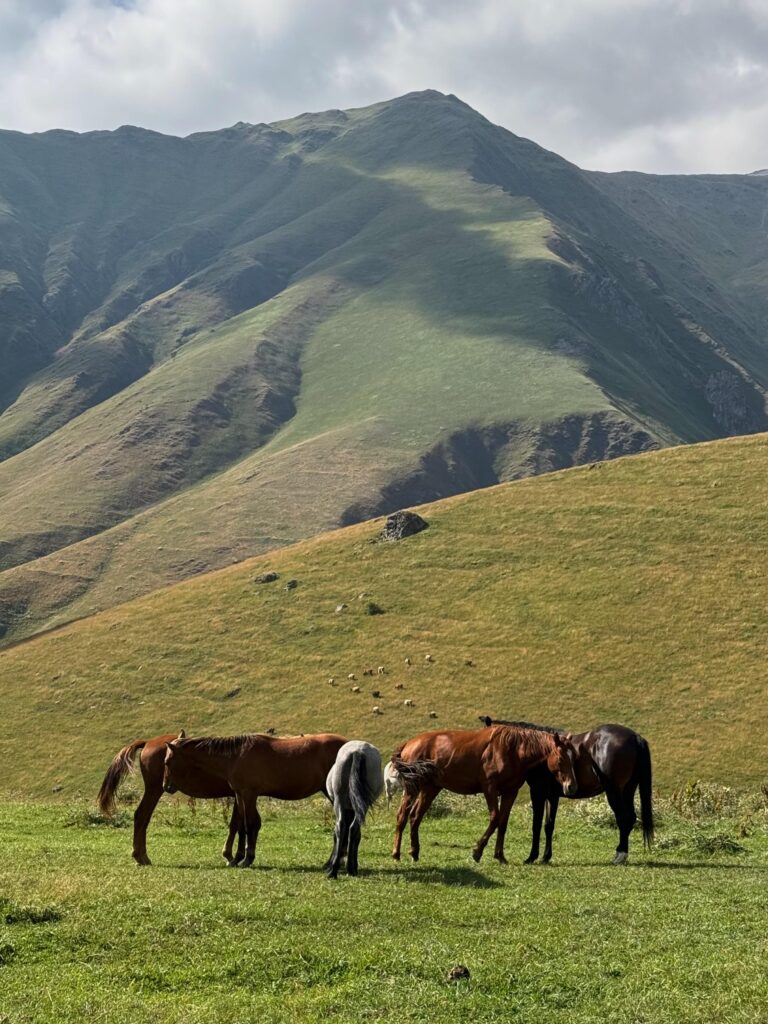
Kazbegi doesn’t arrive gently. The mountains just appear, massive and unapologetic, like they’ve been waiting for you to stop talking. Roads curve because the landscape demands it. Cows wander across them like traffic laws are merely a suggestion. Cars stop. People wait. The cows win.
And that’s where something unexpected happens.
Georgia starts to feel… familiar.
Not in a déjà-vu way. In a recognition way. Like stepping into a version of life you already know how to navigate. It reminded me of my childhood, growing up in a small Romanian town 20 years ago — back when life was a bit rough around the edges and no one tried to sand it down.
The same kind of rawness.
Animals just there, because why wouldn’t they be.
Nature close enough to matter.
People welcoming, generous, but never performative. Warm, yes — but also brutally honest. No fake smiles, no rehearsed politeness. If they like you, you’ll know. If they don’t, you’ll also know. And somehow, that feels comforting.
Laundry drying outside makes perfect sense. Food feels like fuel, not performance. Simple, hearty, deeply comforting. The kind of food that doesn’t ask for feedback. You eat. You sigh. You eat more. The wine helps. A lot.

And then there was Juta.
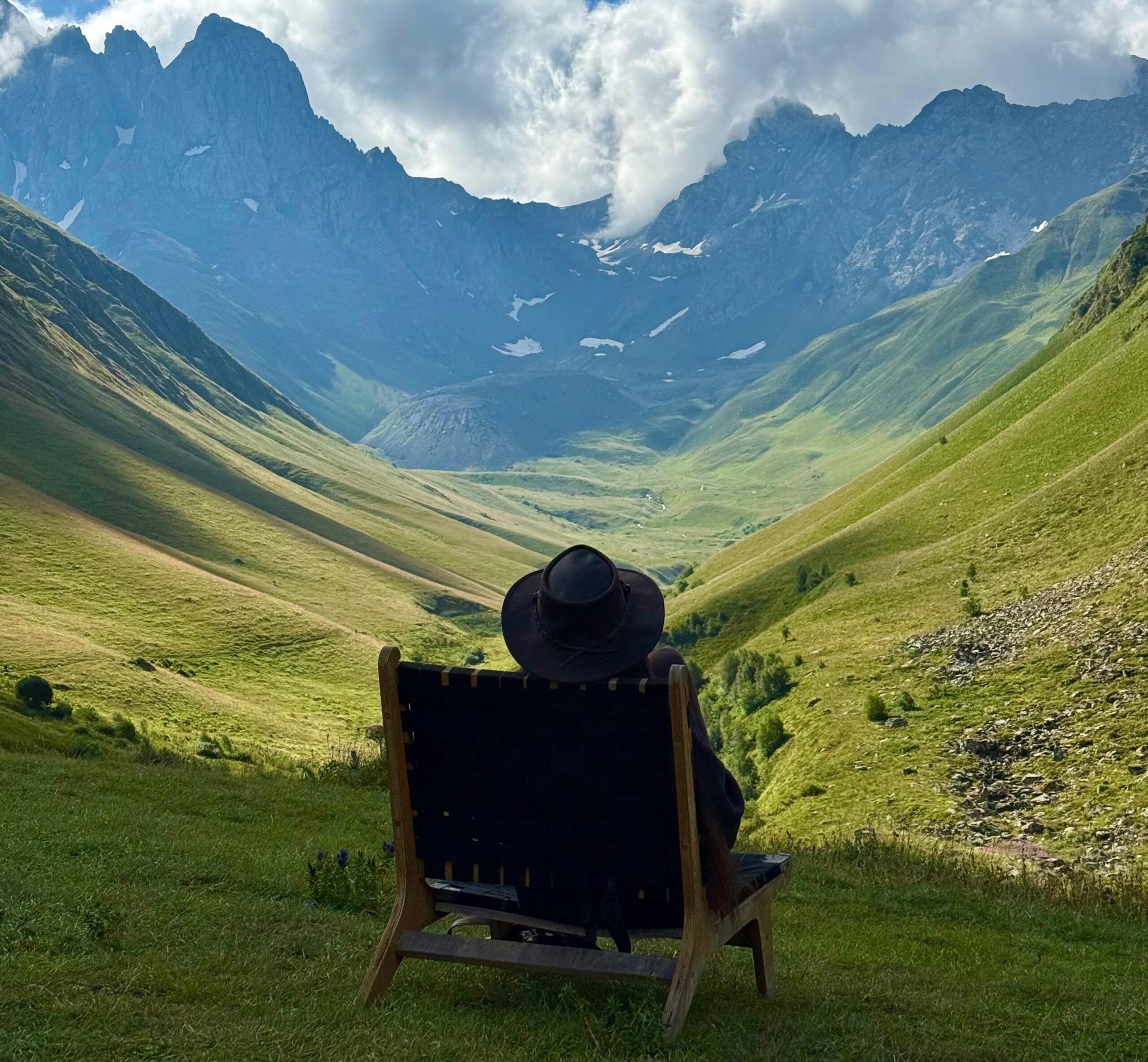
A place that feels less like a destination and more like the end of the road — in the best way. From there, the hike begins. You drive up a mountain road, then you stop. Not because you want to, but because that’s as far as cars are allowed. The rest you do on foot. A few kilometres up, the air thinning, the noise disappearing, the landscape slowly taking over the conversation.
At 2360 meters, the Fifth Season cabin waits quietly. Reaching it feels earned, but not in a dramatic, summit-selfie way. More like your body finally syncing with the place. I slept there, wrapped in silence, mountains pressed close on all sides. The kind of sleep that doesn’t come from exhaustion, but from everything being… enough.
Time behaves differently. Mornings are quiet on purpose. The cold stays sharp even in summer, just to keep you alert. You step outside and feel small in a way that isn’t unsettling — just honest. Like the world gently reminding you it doesn’t revolve around you, and never has.
After that, everything else slows down.
Wrapped in blankets and silence, I re-read Walden. Which felt almost embarrassingly on the nose, but also… correct. Thoreau talking about stripping life down to its essentials, while I was quite literally doing exactly that — no signal, no distractions, just mountains, cold air, and the sound of nothing happening. It didn’t feel like escapism. It felt like alignment. Like the book finally made sense .
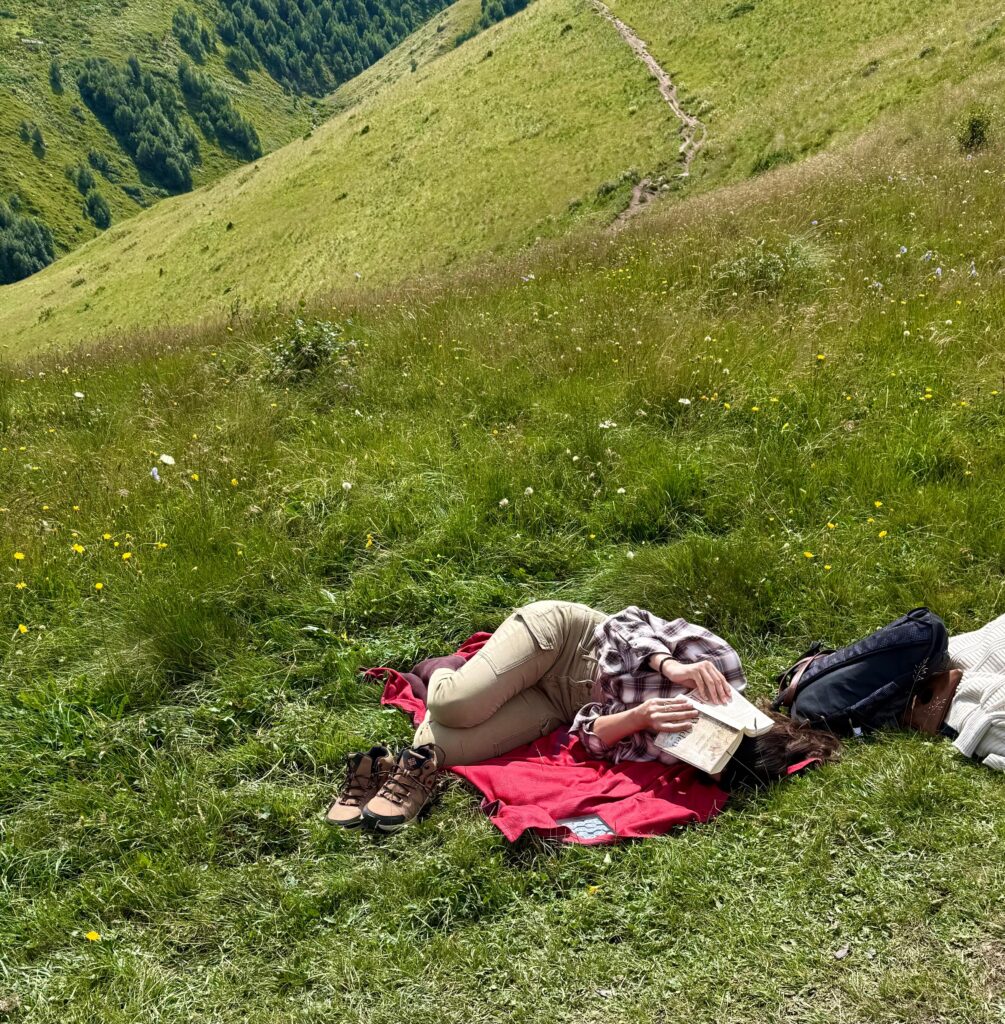
And oddly enough, despite the altitude, the isolation — I felt safe. Safer than expected. The mountains didn’t feel threatening or dramatic. They felt steady. Protective, even. Like if something were to go wrong, it wouldn’t be out of malice — just weather, gravity, reality. And there was something deeply comforting in that honesty.
Somewhere between Juta, mountain cabins, village roads, honest conversations, and meals that feel earned rather than plated, something loosens.
Not a revelation.
Not a life reset.
Just the quiet realization that time doesn’t need micromanaging. That not everything has to be narrated, optimized, or turned into a takeaway.
Georgia doesn’t ask to be understood. It doesn’t explain itself. It lets you observe. And maybe that’s why it stays with you — not because it overwhelms you, but because it feels like something you once knew and forgot.
You leave with dust on your shoes, cold air still in your lungs, and the memory of sleeping at 2360 meters, surrounded by mountains that didn’t care who you were.
Four hours by plane from home in Dubai, and suddenly you’re in another world.
One that feels completely different — and strangely like home.
And somehow, that’s exactly why it mattered.